
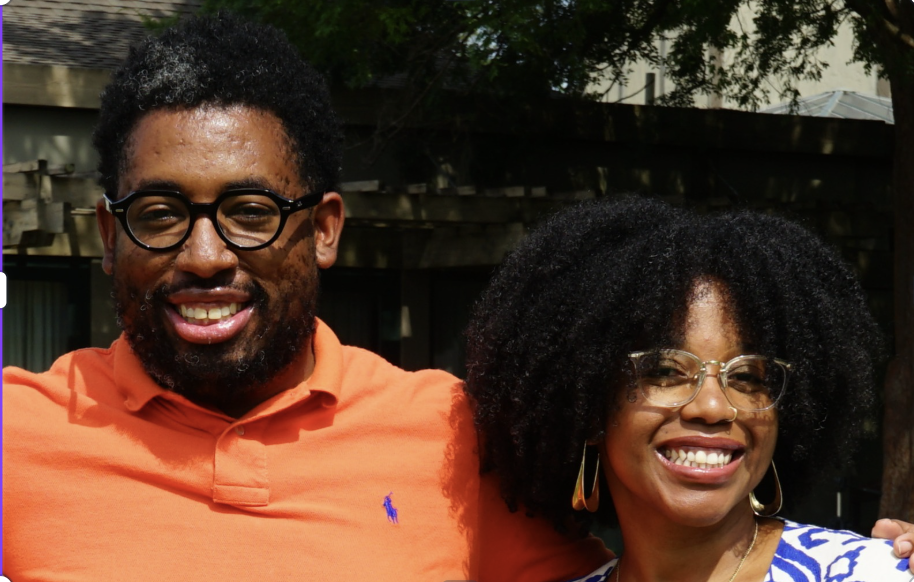
We are excited to announce the latest chapter of our evolution as an organization– CTWO is moving to a co-directorship. Fully embracing our values, we are elevating internal leadership and promoting the work of long-time organizer and CTWO Staff member Avery Bizzell as Co-director alongside our current Director, Chinyere Tutashinda.
We remain adaptable to the times, making the strategic changes necessary to continue our work.
Last week, our communications team sat down with the new Co-directors to introduce this shift to our audience. We welcome you to read below to understand what this means for CTWO and learn more about the individuals leading the way.
What does a co-directorship mean for CTWO?
Avery: Well, it’s not new; we’ve had this model before. It allows us to do more and focus on the things we still want to hold on to.
Chinyere: I have tried to model and create spaces of democracy in our work. It is one of our values as an organization; we wanted to put more of that into our governance model with co-leadership. This allows us to truly honor how we move. One, it addresses the workload and capacity and what makes sense in this moment to remain responsive, and two, it honors the legacy and the work that Avery has been doing and has taken up in this organization for the past 12 years.
How might this model strengthen the way you train and support organizers?
Avery: It allows them to see a different structure and different leadership. People who join the movement get to witness, through our various programs, what kind of leadership is possible. Within our program, Praxis, we are incubating new orgs, and in co-governance we get to talk about how that plays out and model it.
How did you come to work at CTWO?
Avery: I came out of SEIU and the labor movement. I was looking for organizing that is more reflective of my values and my people. At the time, CTWO was a Bay Area initiative that was about to go national, and I went through the longest hiring process of my life to become an Organizer for CTWO. I've been here for 12 years since.
Chinyere: I first heard about CTWO in 2008 or 2009 through a pamphlet that was about the MAAP program, and I was intrigued. I loved trainings and opportunities to learn; I would sign up for any trainings I could find. As an organizer focused on youth organizing and educational justice, I came out of Oakland and the Bay Area. I’d been to the mansion as a kid for a youth program, and I became familiar with CTWO in that area and their programming at the time.
I got to know a staff member in 2014 through BLM. I gradually grew closer to the organization and was eventually invited to become an MAAP trainer starting in 2016, and I continued through the next three summers. In 2019, I came to the CTWO team with the proposal to merge.
How will you make decisions, and what happens when you disagree?
Avery: We’ll do it together when it makes sense. We talk a lot. Even before this Co-directorship, I could call Chin; she could call me. We have a level of trust that has been built up.
Chinyere: With a deep level of trust. Co-governance can be hard. The decision for us was deeply informed by how we already worked together. We functioned as a sounding board and collaborators. We continue with the work and trust we’ve built over the years; there will still be difficult moments. We will be working with someone to help us renegotiate power dynamics and make sure that collaborative governance is working. But we are taking the time to go slow and set things up together so that this can be successful in the long run.
What do you each admire most about the other’s leadership style?
Chinyere: Avery shows up for people. That is the people he works with, loves, community, family, friends. Has a broad understanding and appreciation of people. He shows up in how he approaches the work. Whether that's flexibility around work hours and collaboration with the team, or getting things done and holding people accountable in ways that hold their dignity and relationships. Avery is a great organizer. Bringing that labor background is really beneficial.
Avery: She has vision, and she moves with that vision. She inspires people. She also has no limits. Very creative. A rule breaker. She asks, “Why does that exist? Why does it have to be that way?” The organization is what it is because of her vision, and she pushed us to think outside of the box and about what is needed. Also, she cares for her people, family, and friends; she’ll always figure it out for them.
Stay tuned for more from our Co-directors in the coming months as they evolve within their roles.
Notes From the Field
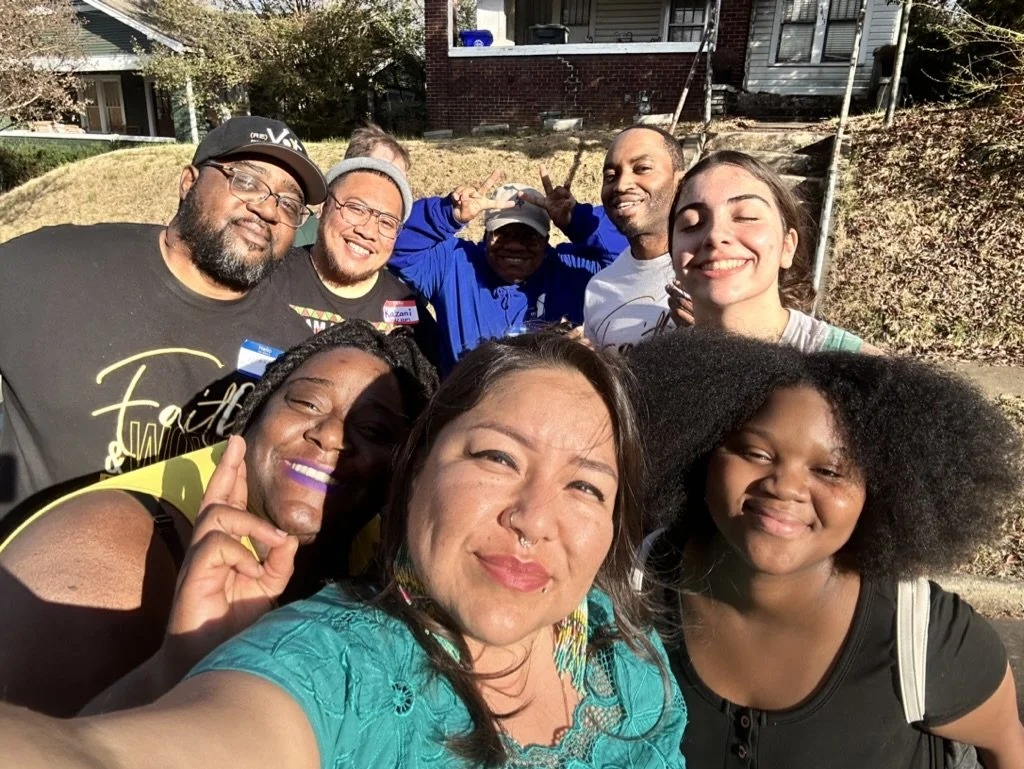
Our work to build the skills and power of organizations and their members continues. Our Organizing team meets people where they are, traveling coast to coast to organizations and movements that call on us.
We hosted Organizing 101 Bootcamps with 5 Elements Youth Program and ¡Poder!, and later with United Women of Color, each bringing participants together for multi-day training focused on the fundamentals of grassroots organizing, people power, and community action.
We also continued our virtual Power Building series, training organizers, activists, community leaders, and members on the skills needed to build and sustain power. We focused on outreach strategies, membership retention, and campaign strategy, equipping folks not just to launch campaigns, but to sustain them and strengthen their organizations for the long haul.
As we enter the final quarter of the year, the work is only accelerating. More in-person and virtual opportunities are on the horizon, particularly as we approach election season and the need to build our collective power.
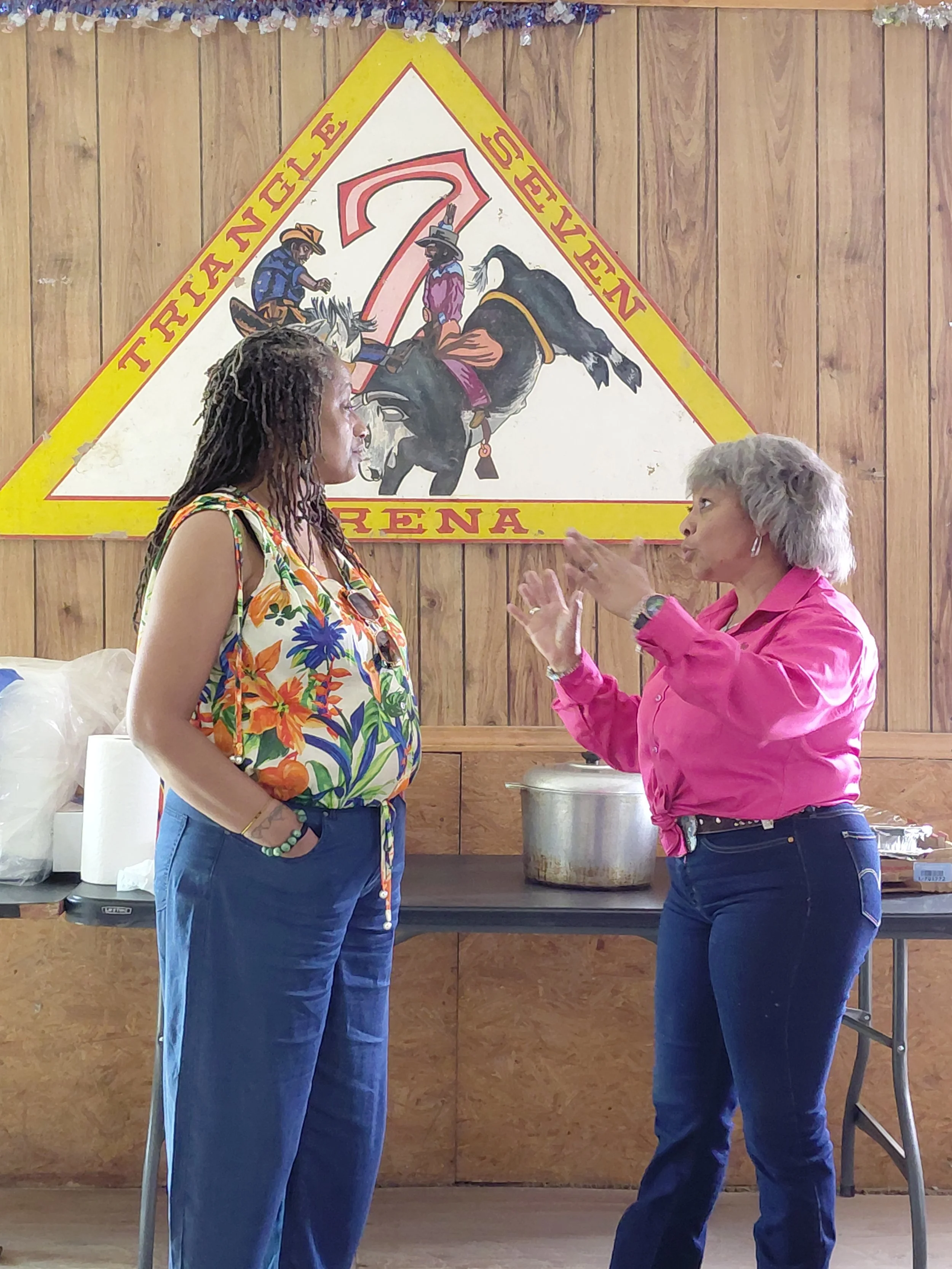
From 2025–2026, the Liberatory Leadership ecosystem ran two cohorts, Praxis Vision and Praxis Rising, built for Black-led organizations in their first five years, the stretch when an organization's structure and culture are still being decided.
Fifteen organizations went through it. Here's what that actually looked like, and what other early-stage leaders can take from it:
Governance became a live question, not a fixed chart. Coaching pushed leaders to stop treating their org chart as an inherited fact and start asking what structure their specific mission actually needed. Delegation was the hardest and most valuable shift.
Several leaders described letting go of control as the actual skill being built, not a soft add-on, but the mechanism that let their organizations grow. The result wasn't abstract: it meant new hires, and capacity that didn't exist a year earlier. They learned in public, with each other. Instead of each organization troubleshooting alone, the cohort became a place to say "this isn't working" out loud.
What can other leaders inside early-stage organizations learn from this? You don't need fifteen organizations and a formal coaching structure to apply the pattern, revisit whether your structure still matches your mission, treat delegation as capacity-building rather than loss of control, and find even one peer relationship where you can say what isn't working before it becomes a crisis.
To apply to the next round of the Liberatory Leadership Praxis Cohorts, stay connected for updates.
“Being part of this cohort has been a reminder and reinforcement to stay aware of what my organization’s vision and mission are and to allow that to be my guiding touchstone… Letting people play to their strengths and not treating it as a threat. It makes it better. Knowing when to evolve. Acknowledging when something needs to change/end.”
Center for Third World Organizing
1714 Franklin St #100-245
Oakland, CA 94612
United States
